
Traditional Circumcision Surgery in Ahmedabad
The time-tested way, in careful hands.
Traditional circumcision is the original, proven method of removing the foreskin — practised across cultures for centuries and still the right choice for many patients today. In Ahmedabad, Dr. Alpesh Patel (M.S., General Surgeon) performs traditional (open) circumcision for infants, children, adults and elders with careful pain control, strict hygiene and a clean, well-healed result.
Book your appointment

 M.S., General Surgeon
The procedure
What is traditional circumcision?
At a glance
- Anaesthesia
- Local or general
- Instruments
- Scalpel or surgical scissors
- Stitches
- Absorbable
- Wound healing
- 1–2 weeks
- Full recovery
- 4–6 weeks
Traditional, or open, circumcision is a surgical procedure in which the foreskin covering the head of the penis is removed with a scalpel or surgical scissors, and the skin edges are then closed with fine, absorbable stitches. It can be performed under local or general anaesthesia depending on the patient's age and comfort.
It remains the most widely understood and dependable circumcision method, and it gives the surgeon full control to tailor the procedure to each patient — which makes it especially useful in complex cases or where a precise, individual result is needed.
Step by step
How traditional circumcision is performed
- 1
Preparation
Dr. Patel examines the patient, reviews their medical history and checks for any conditions that need attention. Anaesthesia is then given to keep the procedure completely pain-free.
- 2
The surgery
The foreskin is gently drawn forward and marked for removal. A clean incision is made around it, and the excess foreskin is carefully cut away. Any bleeding is sealed, and the remaining skin edges are closed neatly with absorbable stitches that dissolve on their own.
- 3
Aftercare
The area is dressed with antibiotic ointment and gauze. Simple pain relief and, where needed, antibiotics are prescribed. Most of the healing happens in the first one to two weeks, with full recovery over about four to six weeks.
Procedure photos (4 steps)


Is it right for you?
When is traditional circumcision chosen?
While stapler circumcision suits many patients, the traditional method is often preferred when:
A tailored, hands-on approach
The case needs a tailored, hands-on approach rather than a one-size device.
Unusual anatomy
There is an unusual anatomy or a complication that calls for careful judgement.
Personal preference
The patient or family simply prefers the classic surgical method.
Religious or cultural reasons
It is being done for religious or cultural reasons where an open procedure is expected.
Benefits
Benefits of traditional circumcision
A proven, time-tested method with a long track record
Full surgical control for a precise, tailored result
Suitable for all ages and for complex cases
Performed under anaesthesia for a pain-free experience
Carried out by an experienced surgeon with strict hygiene
What to expect
Recovery timeline
Days 1–3
Mild swelling and discomfort, managed with simple medication.
Week 1–2
The wound heals well; stitches dissolve on their own.
Weeks 4–6
Full recovery, after which normal activity resumes.
Keep the area clean and dry, wear loose clothing, take the prescribed medicines, and avoid strenuous activity until your surgeon clears you.

Dr. Alpesh Patel
M.S., General Surgeon
Your surgeon
Why choose Dr. Alpesh Patel
- 01An experienced general surgeon specialising in circumcision
- 02Expert in traditional, stapler and Modified 6S techniques
- 03A focus on hygiene, careful technique and clear aftercare
- 04Private, comfortable rooms for a calm recovery
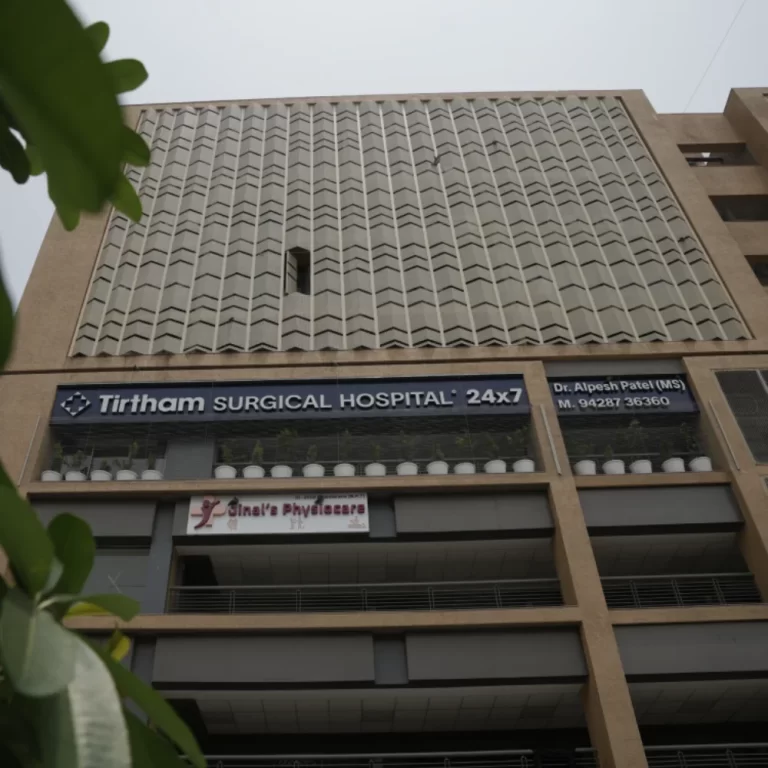
- 05Convenient location on Science City Road, Sola
FAQ
Frequently asked questions
Still have a question?
Ask Dr. Patel’s team directly — consultations are private and confidential.
Chat on WhatsAppIs traditional circumcision safe?+
Yes. It is a well-established, routine procedure, and complications are rare when done by an experienced surgeon.
Does it hurt?+
No — it's done under anaesthesia. Afterwards, any discomfort is mild and easily managed.
Will the stitches need to be removed?+
No. The stitches used are absorbable and dissolve on their own as the area heals.
How long until I recover fully?+
The wound heals in about one to two weeks, with full recovery over roughly four to six weeks.
Appointments
Book a consultation
Phone